Konkan Shimga – The Festival of Tradition, Community and Village Memories
In the Konkan region of Maharashtra, Holi is popularly known as Shimga. But Shimga is much more than simply lighting a Holi fire or playing with colours.
It is the time when villages begin to feel different.
It is the time when traditional processions, folk songs and community celebrations bring people together.
It is also the time when many Konkani families living in Mumbai, Pune and other cities return to their native villages.
For many people, Shimga is a celebration of their roots, relationships and memories of home.
The Maharashtra Tourism Department describes Shimga as a distinctive Konkan celebration that includes local rituals, folk traditions, community gatherings and, in some places, palkhi processions and folk performances. Customs can vary from village to village. (maharashtratourism.gov.in)
🌴 Why Is Shimga Important in Konkan?
Traditional village life in Konkan has long been connected with nature, agriculture, temples and community traditions.
Festivals therefore often involve more than household rituals. They can bring families, neighbours and village communities together.
Shimga is one such celebration.
The Maharashtra Tourism Department notes the agricultural and community roots associated with Shimga and describes it as a celebration connected with the arrival of spring, traditional beliefs and community togetherness. (maharashtratourism.gov.in)
🔥 When Shimga Preparations Begin, the Village Changes
As Shimga approaches, the atmosphere in a Konkan village begins to change.
Homes are cleaned.
Courtyards are prepared.
Families start planning the celebrations.
Relatives living in cities begin making travel plans.
Phone calls become more frequent.
“When are you coming?”
“What time will you reach?”
“What are you bringing from the city?”
These small conversations become part of the festival.
A quiet village home may suddenly become full of people again.
Someone arrives from Mumbai.
Someone comes from Pune.
Someone travels from Thane or another city.
And for a few days, the house feels like it did years ago.
That is often the first feeling of Shimga.
🪵 Holi and the Community Celebration
The Holi ritual is an important part of Shimga celebrations in many Konkan villages.
People gather at designated places and participate in the traditional ceremony.
The ritual has religious significance, but it also has a strong community aspect.
The Maharashtra Tourism Department describes bonfire-related rituals and community participation as part of Konkan's Shimga traditions. It also notes that offerings such as coconut and grains are observed in some celebrations.
However, traditions are not identical everywhere.
One village may have a simple ceremony.
Another may organise a larger community celebration.
In some places, local temple traditions may shape the entire festival.
That variation is an important part of Konkan's cultural identity.
🛕 Shimga and Palkhi Processions
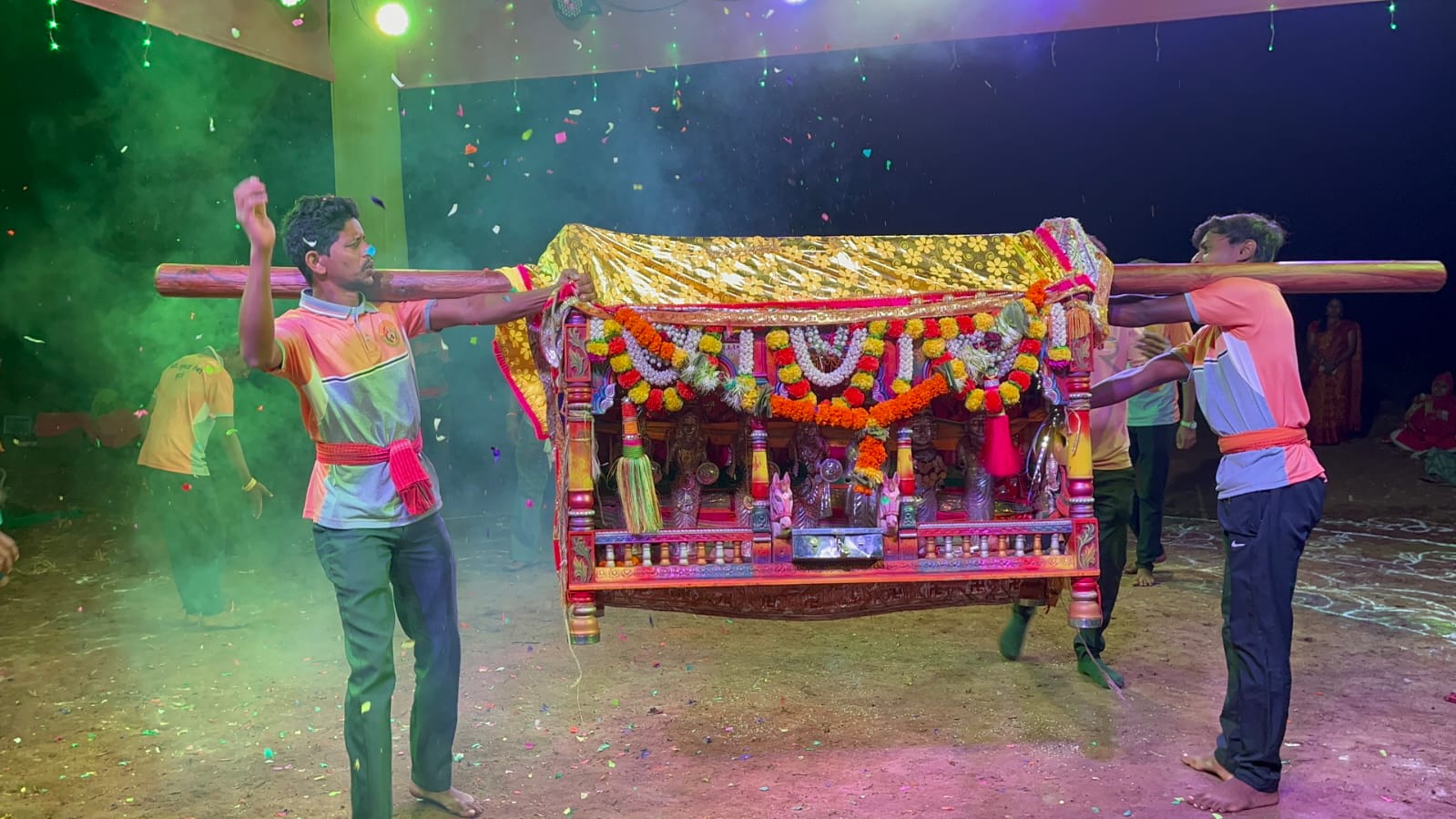
One of the distinctive traditions associated with Shimga in parts of Konkan is the palkhi procession.
A local deity's palkhi may be decorated and carried through the village as part of the celebrations.
Traditional instruments accompany the procession.
The sound of drums brings people out of their homes.
Children gather along the roads.
Older residents watch from outside their homes.
For many people, the procession is not only a religious experience but also a reminder of childhood and village life.
The Maharashtra Tourism Department lists palkhi processions among the distinctive features of Konkan Shimga celebrations.
🥁 The Sound of Drums Across the Village
During Shimga, the sound of traditional drums can become one of the strongest memories of the festival.
It is more than music.
It feels like the village itself is announcing that the celebration has begun.
Roads, temple surroundings, village squares and courtyards become part of the festive atmosphere.
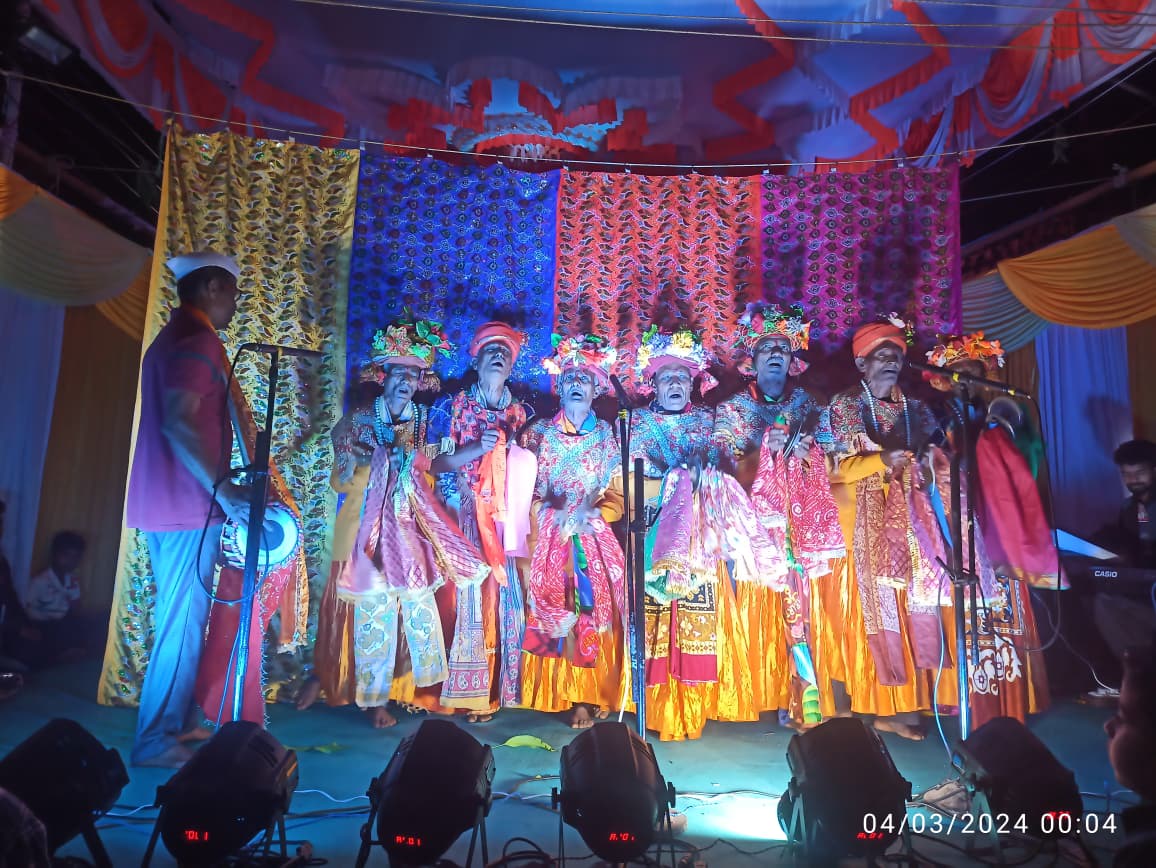
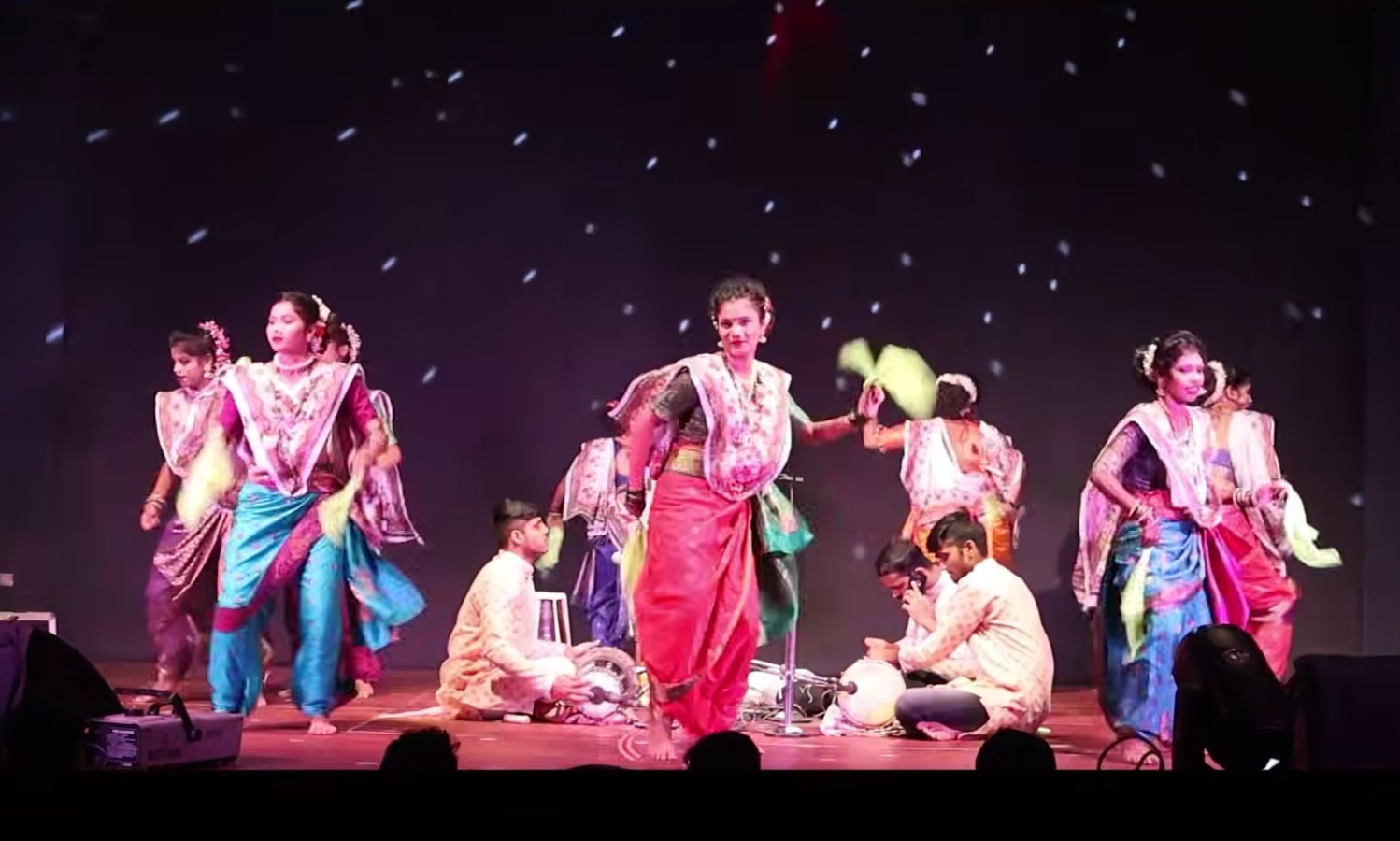
In some places, traditional folk songs, dances and performances are also part of the celebrations.
🎭 Shimga and Konkan's Folk Arts
Shimga also provides space for traditional folk arts in several parts of Konkan.
Depending on local traditions, performances such as Dashavatara, Powada, folk theatre and other regional art forms may be organised during the festive period.
These performances are not only entertainment.
They tell stories.
They present mythological episodes.
They reflect aspects of village life.
And they provide local artists with an opportunity to present their traditions to the community.
The Maharashtra Tourism Department mentions Dashavatara, Powada and other folk performances among the cultural traditions associated with Shimga. :contentReference[oaicite:10]{index=10}
🎶 Shimga Songs That Keep Memories Alive
Traditional folk songs are another part of Shimga culture.
Today, almost any song can be played instantly on a smartphone.
But hearing a traditional village song during a festival feels different.
The same song may have been heard by grandparents decades ago.
The next generation may have learned its verses simply by listening.
And years later, those same songs may still be heard during the village celebration.
Folk traditions do more than entertain.
They keep memories alive.
👨👩👧👦 Shimga Is Also a Time to Meet Family
Perhaps one of the most beautiful parts of Shimga is the way it brings people together.
For many families living in cities, there are only a few opportunities each year to return to their native village.
Shimga can be one of them.
Cousins meet again.
Relatives gather.
Old friends reconnect.
Conversations continue late into the night.
Childhood memories return.
For a few days, the rush of city life is left behind.
Sometimes Shimga is more than a festival—it is a reason to return to the people and places we call home.
🏡 Shimga for Konkani Families Living in Mumbai
For a Konkani person living in Mumbai, Shimga can bring a special feeling.
The rest of the year may be filled with offices, local trains, traffic and busy schedules.
But when Shimga approaches, the mind starts travelling towards the village.
Travel plans are made.
Bags are packed.
Calls are made home.
And after reaching the village, the sounds of the city slowly disappear.
The village road.
The family home.
The coconut trees.
The familiar faces.
And suddenly you realise—
No matter how far we travel, our village continues to feel like home.
🍚 Food and Shimga Celebrations
Food naturally becomes part of festive celebrations in Konkan.
Different families and villages may prepare different traditional dishes during Shimga depending on local customs and family traditions.
Some homes may prepare festive sweets.
Others may prepare a special traditional Konkani meal.
When relatives arrive, food is often prepared with extra care.
The most important part is not always the dish itself.
It is the feeling behind it.
Someone prepared it especially for you.
🎨 Colours and Shimga
Colours are also connected with Holi celebrations.
In Maharashtra, Rangpanchami is traditionally observed on the fifth day after Holika Dahan.
However, the exact way and timing of colour celebrations can vary according to local traditions.
This is important when discussing Konkan Shimga because every village does not celebrate the festival in exactly the same way.
The local tradition is what gives each village its own identity.
🌿 Shimga and the Connection with Nature
Traditional festivals in Konkan are often connected with the region's natural environment and agricultural way of life.
The changing seasons, farming cycles, rainfall and village life have historically influenced local traditions.
The traditional background of Shimga is also associated with the transition of seasons and agricultural life.
This makes Shimga more than a single-day celebration.
It is part of the wider cultural rhythm of village life.
❤️ Why Does Shimga Still Feel Special?
Times have changed.
More people have moved from villages to cities.
Communication has become digital.
Lifestyle has changed.
Yet when Shimga arrives, many people still try to return to their villages.
Because some experiences cannot be recreated online.
The sound of drums in the village.
Standing in front of the palkhi.
Meeting relatives in person.
Eating together at the family home.
Sitting outside at night and talking for hours.
These are experiences that have to be lived.
👦 Passing Shimga to the Next Generation
A tradition survives when the next generation gets an opportunity to experience it.
Children growing up in cities may not automatically understand the traditions of their ancestral villages.
Taking them to the village during Shimga, explaining the local customs and allowing them to experience the celebrations can help preserve those traditions.
One day, they may tell their own children:
“This is how Shimga was celebrated in our village.”
That may be one of the most meaningful ways to preserve cultural heritage.
💭 How Is Shimga Celebrated in Your Village?
Now we want to hear from you. ❤️
How is Shimga celebrated in your village?
Is there a palkhi procession?
Are traditional Shimga songs performed?
Are Dashavatara or other folk performances organised?
And most importantly—
What is one Shimga memory from your village that you still remember clearly?
Share your village name and your village's special Shimga tradition in the comments.
Your small memory might remind another Konkani family of their own village and childhood.
🙏 Let's Preserve Shimga and Its Traditions
Konkan Shimga is more than a Holi celebration.
It is connected with village temples, folk arts, songs, family relationships and community life.
Times will continue to change.
Some traditions may evolve.
The way festivals are organised may also change.
But the feeling behind them—the sense of togetherness and belonging—is worth preserving.
Because the true identity of a festival is not always found in its size or decoration.
It is found in:
standing together with our people, remembering our village and introducing the next generation to the traditions of our land.
When Shimga arrives, Konkan feels alive again.
The drums begin.
The palkhi moves through the village.
Families gather.
And somewhere in the heart, one feeling remains—
“No matter how far we go, our village will always be ours.” ❤️🌴
Jai Konkan!