When we think of Konkan, we imagine lush green hills, rain-soaked paddy fields, coconut and areca-nut plantations, the Arabian Sea and peaceful village life. But the true identity of Konkan is not limited to its natural beauty. Its rich folk traditions, local languages, songs, performances and legendary Shahirs are equally important parts of its cultural heritage.
One such distinctive folk tradition is Shakti-Tura. In different parts of Konkan, related traditions may also be associated with names such as Kalgi-Tura, Jakhadi or Balya Nrutya. The terminology and style can vary from one region to another. Singing, musical instruments, dance, poetry and question-and-answer performances form an important part of this folk tradition.
🥁 When the First Beat of the Dholki Begins
It is night in the village. The day's activities have finally come to an end. Slowly, people begin gathering near a temple, an open ground or a village courtyard.
And then comes the first beat of the dholki.
The surroundings become quiet. The performers take their positions. The sound of ankle bells begins to fill the air, and within moments, an ordinary village space turns into a lively folk stage.
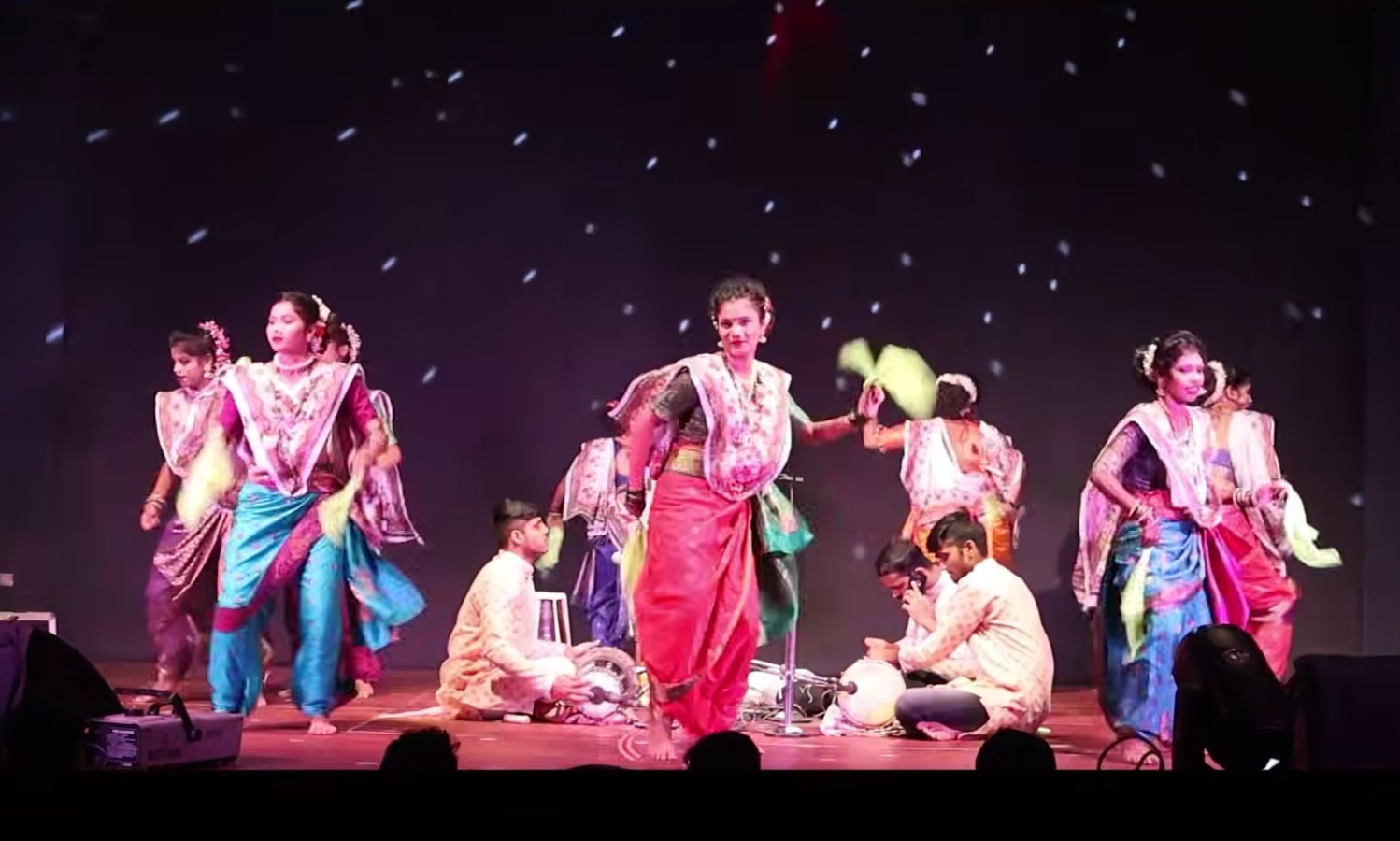
In Shakti-Tura and related Jakhadi performances, Shahirs, musicians and dancers come together. Rhythmic movements, ankle bells, the beat of the dholki and powerful singing create an atmosphere filled with energy.
It is not simply a performance.
It is a living experience of village memories and culture.
🔱 What Do Shakti and Tura Represent?
The name Shakti-Tura carries religious and cultural symbolism. Traditionally, Shakti is associated with Goddess Parvati, while Tura is associated with Lord Shiva.
The tradition includes poetic dialogue, questions and answers, and musical exchanges between two sides. Through these performances, religious, mythological, philosophical and social themes can be presented.
That is why Shakti-Tura is more than a form of dance or singing.
It is a combination of music, poetry, thought and performance.
🎤 The Shahir – The Voice of the Tradition
The Shahir is one of the most important figures in a Shakti-Tura performance. A Shahir is not simply a singer. The performer needs knowledge of poetry, command over language, familiarity with cultural and religious references, vocal control and the ability to respond spontaneously.
Many Shahirs have contributed to the Shakti-Tura tradition of Konkan through their voices, compositions and performances. Among the names remembered in connection with this tradition is Shahir Ramchandra Ghanekar Bुवा, along with many other performers who helped take this folk art to audiences.
Ramchandra Ghanekar Bुवा is remembered with respect in discussions surrounding the Shakti-Tura tradition of Konkan. His life and contribution deserve a separate story, which we will explore in detail in another article.
⚔️ Sawal-Jawab – A Battle of Words and Knowledge
One of the most engaging parts of Shakti-Tura is the Sawal-Jawab, or question-and-answer exchange.
A Shahir from one side presents a question in poetic form, and the performer from the other side is expected to respond through knowledge, poetry and presence of mind.
The questions may draw from mythology, religion, philosophy and cultural themes.
Sometimes the question is so challenging that even the audience begins thinking about the answer.
And when the other Shahir responds with a sharp and creative answer, the audience breaks into applause.
This is why the exchange is not merely a musical competition.
It is also a test of words, knowledge, memory and presence of mind.
🎭 Jakhadi – Rhythm, Movement and Group Energy
Jakhadi performances associated with the Shakti-Tura tradition place considerable importance on group participation.
Performers move rhythmically together, accompanied by ankle bells and the beat of the dholki. The coordinated movements of the performers create a unique energy that is difficult to experience through a recording or screen.
Traditional performances have evolved with time. In some places, modern sound systems, lighting and costumes have become part of the presentation.
Yet the rhythm, dance and participation of the community remain at the heart of the tradition.
🌧️ Shakti-Tura During Ganeshotsav
Ganeshotsav and folk traditions share a close relationship in Konkan. During the festival, homes are filled with prayers, aarti and preparations for offerings. Once the day's activities are over, cultural performances can bring the village together at night.
People gather in open spaces to watch the performers.
Children, young people, parents and grandparents all become part of the audience.
On one side is the sound of Ganpati aarti.
On the other is the beat of the dholki.
This is what makes Ganeshotsav in Konkan more than a religious festival.
It becomes a celebration of folk art, entertainment and community life.
🏡 From Village Courtyards to Larger Stages
Traditionally, folk performances were often organised in village courtyards, near temples or in open spaces. Today, these traditions are also finding space on larger cultural stages and at organised events.
Konkani communities living in cities such as Mumbai also organise traditional cultural programmes, helping people who have moved away from their villages remain connected to their roots.
For someone living far away from Konkan, watching such a performance is more than entertainment.
It is a reminder of their village, their childhood and their homeland.
👴 The Legacy of Earlier Shahirs and the New Generation
No folk tradition survives because of a single artist. Behind every tradition are generations of performers, Shahirs, musicians, dancers and audiences.
Many Shahirs have contributed to the Shakti-Tura tradition of Konkan. Some became known for their powerful voices, while others contributed through poetry and original compositions.
Artists such as Ramchandra Ghanekar Bुवा helped bring greater recognition to this tradition and created lasting memories among audiences.
The responsibility of carrying this tradition forward now rests with the next generation of performers and cultural enthusiasts.
📜 The Tradition Is Changing, But Its Spirit Remains
As times change, folk traditions also evolve. Modern sound systems, new costumes, lighting and contemporary musical arrangements may now be part of some performances.
These changes do not necessarily mean that the tradition is disappearing. They can also be seen as ways in which folk art adapts to a changing audience.
However, while embracing modern presentation, it is equally important to preserve the Shahiri tradition, Sawal-Jawab, rhythm, dance and cultural meaning that form the foundation of the art.
The outer form may change.
But the spirit of the tradition should remain alive.
❤️ Shakti-Tura Is More Than Dance
When we watch a Shakti-Tura performance, we see the dholki, ankle bells, dancers and singers.
But behind all of this lies something much deeper.
It is the story of Konkan's collective memory.
Songs passed from one generation to another, words carried through the voices of Shahirs, performances held in village after village and audiences staying awake late into the night have all helped shape this tradition.
Preserving Shakti-Tura is therefore not simply about preserving a dance form.
It is about preserving an important part of Konkan's cultural identity.
🌱 Why This Tradition Needs to Reach the Next Generation
Today, entertainment is available at our fingertips. With a mobile phone, we can watch music and performances from anywhere in the world within seconds.
But sitting in a village courtyard and listening to a Shahir perform a Sawal-Jawab is a completely different experience.
Hearing the dholki live, watching the dancers, responding to the performers and experiencing the entire village coming together cannot be fully recreated on a screen.
That is why the next generation should not only hear about this tradition but experience it in person.
Giving folk artists a platform, encouraging performers and introducing younger audiences to these traditions are important steps towards keeping the art alive.
💭 Does Shakti-Tura Still Take Place in Your Village?
Now we want to hear your memories. ❤️
Does your village still organise Shakti-Tura or Jakhadi performances during Ganeshotsav, Navratri, Dussehra or other festivals?
What is this tradition called in your village? Which Shahirs did you watch when you were growing up? Do you still remember the songs of Ramchandra Ghanekar Bुवा or another Shahir?
If you have a special memory, a favourite Shahir or an old song connected with Shakti-Tura, share it in the comments. ❤️
Your small memory may remind another Konkani reader of their own village and those unforgettable nights of their childhood.
🙏 Let the Shakti-Tura Tradition of Konkan Live On
Konkan is not defined only by its beaches, green hills, mangoes and cashews. The true richness of this land also lies in its people and the folk traditions they have preserved across generations.
Shakti-Tura is one of those beautiful traditions.
Times are changing. Villages are changing. Entertainment is changing. But as the world changes, our folk traditions should not disappear with it.
They need to be performed, appreciated, documented and introduced to the next generation.
Because one day, when a child asks—
“What is Shakti-Tura?”
The answer should not exist only in a book.
That child should have heard the beat of the dholki in a village courtyard, experienced the sound of ankle bells, listened to a Shahir's Sawal-Jawab and witnessed this folk art with their own eyes.
May the beat of the dholki continue, may the sound of the ankle bells never disappear, may the voices of the Shahirs continue to be heard, and may Konkan's folk traditions reach generations to come. 🌴🥁❤️
Jai Konkan!
Jai Folk Art!