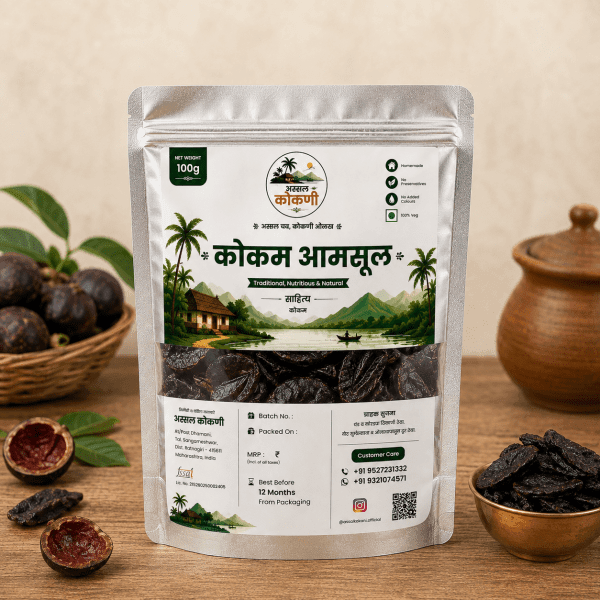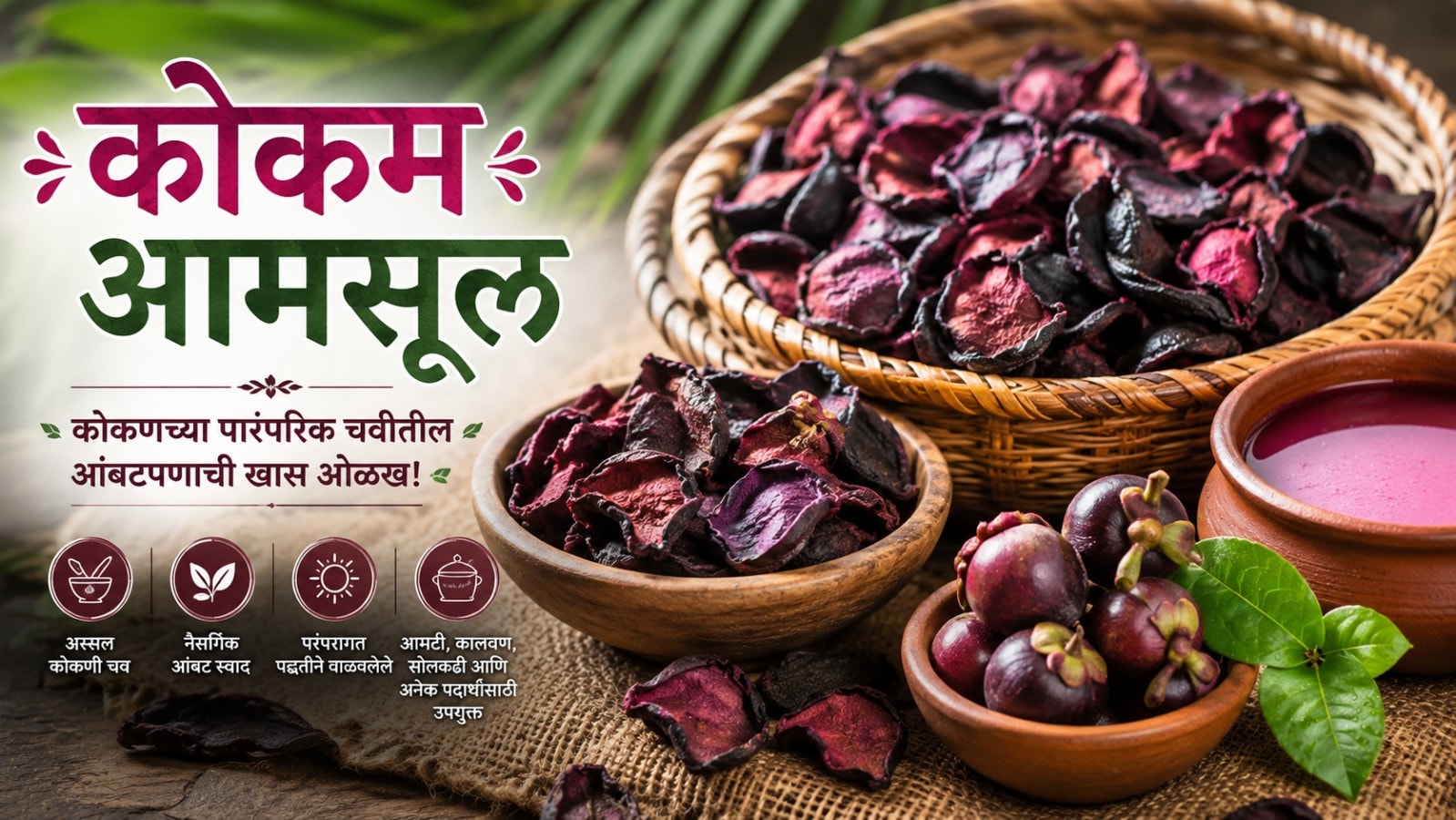
Kokam Aamsul – The Traditional Sour Ingredient of Konkan Cuisine
Konkan's food culture is known for its use of simple, locally available ingredients.
Rice, coconut, pulses, spices and regional fruits all have an important place in traditional Konkani cooking.
Among these ingredients, Kokam Aamsul has a special place.
Made from the dried rind of kokam fruit, Aamsul is traditionally used to add a distinctive sour flavour to amti, saar, kadhi, vegetables and several regional preparations. :contentReference[oaicite:10]{index=10}
Kokam Aamsul is therefore more than just a souring ingredient. It is an important part of the traditional food culture of Konkan.
🌿 What Is Kokam Aamsul?
Kokam is the fruit of Garcinia indica, a plant associated with the Western Ghats and the Konkan region. :contentReference[oaicite:11]{index=11}
The rind of the kokam fruit is traditionally processed and dried. In Maharashtra, this dried preparation is commonly known as Aamsul or Amsol.
It is primarily used in cooking as a souring ingredient. :contentReference[oaicite:12]{index=12}
Dried Aamsul can have a deep reddish, purple or dark appearance, with a distinctly tangy flavour.
🌴 Kokam and Its Connection with Konkan
Kokam is closely connected with the natural environment and food traditions of Konkan.
The warm and humid climate of the Western Ghats and coastal regions supports kokam trees in many areas. :contentReference[oaicite:13]{index=13}
Traditional food practices developed around locally available seasonal produce.
Processing kokam into a dried form made it possible to preserve the ingredient and use it in cooking beyond its fresh fruit season.
This is one reason Kokam Aamsul became a familiar ingredient in regional kitchens.
🍛 How Is Aamsul Used in Konkani Cooking?
The main culinary role of Aamsul is to provide sourness.
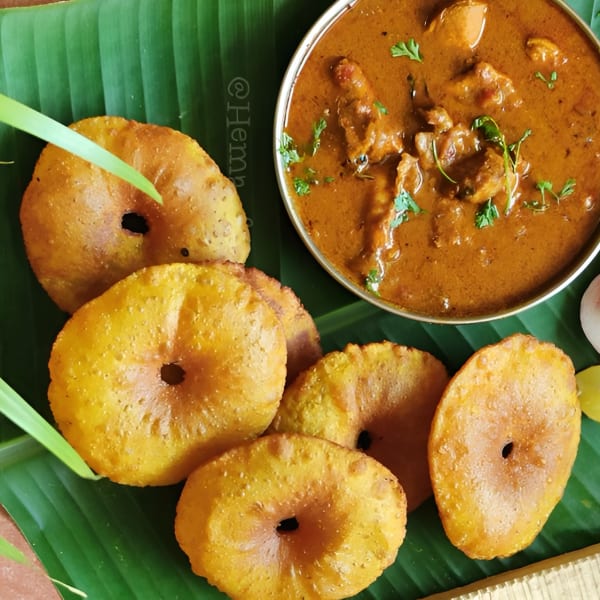
Kokam and dried kokam rind are used in different preparations across the Konkan and western coastal regions. Depending on local traditions, it can be used in amti, saar, vegetables, kadhi and some fish preparations. :contentReference[oaicite:14]{index=14}
The amount used depends on the recipe, the strength of the dried kokam and individual preference.
When used in the right quantity, Aamsul provides a distinctive sour flavour without overwhelming the other ingredients.
🍽️ What Dishes Use Kokam Aamsul?
The use of Aamsul varies between households and regions.
Amti
Some traditional amti preparations use Aamsul to add a characteristic sour note to the dal.
Saar
Aamsul can be used in saar to create a light and distinctive sour flavour.
Kadhi
Kokam is also used in some traditional kadhi preparations.
Sol kadhi, made using kokam extract and coconut milk, is particularly associated with the food traditions of the western coast. :contentReference[oaicite:15]{index=15}
Vegetable Preparations
Some traditional vegetable dishes use Aamsul to balance the flavours of the preparation.
Fish Curries
Kokam is used in several coastal fish preparations, depending on the local recipe. It can provide the sourness traditionally supplied by other souring ingredients. :contentReference[oaicite:16]{index=16}
This gives the dish the distinctive flavour associated with kokam.
🍚 Aamsul and Konkani Amti
Rice and amti are an important combination in many Konkani meals.
Hot rice served with a spiced amti containing the characteristic sourness of Aamsul is a simple example of traditional home cooking.
The quantity of Aamsul is important.
Too much can make a dish strongly sour, while the right amount can help balance the flavours of spices and other ingredients.
Because every household has its own cooking style, the flavour of amti can vary from one home to another.
🥥 Kokam and Coconut
Coconut is one of the most familiar ingredients in Konkani cuisine.
Its mild richness pairs naturally with the sourness of kokam.
Sol kadhi is one of the best-known examples of this combination. It uses kokam extract along with coconut milk. :contentReference[oaicite:17]{index=17}
The same balance of coconut and kokam can also be found in several regional curries and other traditional preparations.
☀️ How Is Aamsul Traditionally Prepared?
Kokam fruit can be processed and dried to create a form that can be stored and used later.
Traditionally, the rind is separated, prepared and dried in sunlight. Some methods may also involve salt or kokam juice.
The exact process can vary according to region, household practice and the type of preparation being made. :contentReference[oaicite:18]{index=18}
Once properly dried, Aamsul can be stored and used as needed in the kitchen.
This is a simple example of how seasonal fruit can be preserved for longer use.
🌧️ Konkan's Monsoon and Traditional Food Storage
The monsoon is an important part of life in Konkan.
Traditional households often prepared and stored certain foods during suitable weather so that they could be used later.
Preparing dried kokam is connected with this broader tradition of seasonal food preservation.
Turning a seasonal fruit into a dried ingredient makes it possible to use it in cooking beyond the fresh fruit season.
🧂 What Does Aamsul Taste Like?
The most noticeable characteristic of Aamsul is its strong sourness.
But its flavour is not simply sour.
Kokam has a distinctive fruity character that gives dishes a flavour different from tamarind, lemon or raw mango.
This unique taste is one reason kokam continues to have an important place in traditional western coastal cooking.
🏡 Every Household Has Its Own Aamsul Tradition
Food traditions are not identical across Konkan.
One household may use Aamsul regularly in amti, while another may prefer tamarind or another souring ingredient for the same dish.
The way Aamsul is soaked, added directly to a preparation or used as an extract can also vary.
These small differences are part of what makes regional food culture so diverse.
🛍️ What Should You Check When Buying Kokam Aamsul?
When buying packaged Kokam Aamsul, it is useful to check the information provided on the package.
- Read the ingredient list.
- Make sure the package is properly sealed.
- Check the net weight and MRP.
- Look at the packed date and best-before date.
- Follow the storage instructions provided on the package.
Proper storage helps maintain the quality and flavour of dried ingredients.
❤️ Kokam Aamsul – A Taste of Konkan
Some ingredients are simple, yet they become essential to the culinary identity of a region.
Kokam Aamsul is one such ingredient.
Whether used in amti, saar, kadhi or a traditional curry, the right amount of Aamsul can give a dish a distinctive flavour.
That is its real charm.
Kokam Aamsul is not simply a souring ingredient; it is part of the traditional taste and identity of the Konkan kitchen.
🌿 Passing Konkan's Food Traditions Forward
Modern kitchens have access to ingredients from all over the world.
Yet preserving traditional local ingredients and the knowledge of how they are used remains important.
Every traditional ingredient carries a connection to the land, climate, seasonal produce and food culture of its region.
Kokam Aamsul is a small but meaningful part of that heritage.
When we continue using it in traditional dishes, we also keep a part of Konkan's culinary tradition alive.
💭 How Does Your Family Use Aamsul?
How does your family use Kokam Aamsul?
In amti?
In saar?
In kadhi?
In fish curry?
Or does your village have another traditional use for Aamsul?
Share your village name and your family's traditional way of using Aamsul in the comments.
Small details like these help preserve the diverse food traditions found across Konkan.
🙏 Preserving the Traditional Taste of Konkan
Kokam Aamsul may be a simple local ingredient.
But behind it are Konkan's landscape, climate, local fruit trees and generations of cooking knowledge.
When we use Aamsul in amti, saar or other traditional preparations, we are not simply adding sourness to a dish.
We are continuing a food tradition.
Preserving such ingredients and sharing their stories helps keep regional food culture alive for the next generation.
Let us preserve the taste of Konkan, celebrate traditional ingredients and carry our food heritage forward. ❤️🌴
Jai Konkan!